Packing Personal Care for One Night Away
Packing personal care for one night away is simpler when you follow your familiar routine, choose one item per task and leave spare duplicates at home.
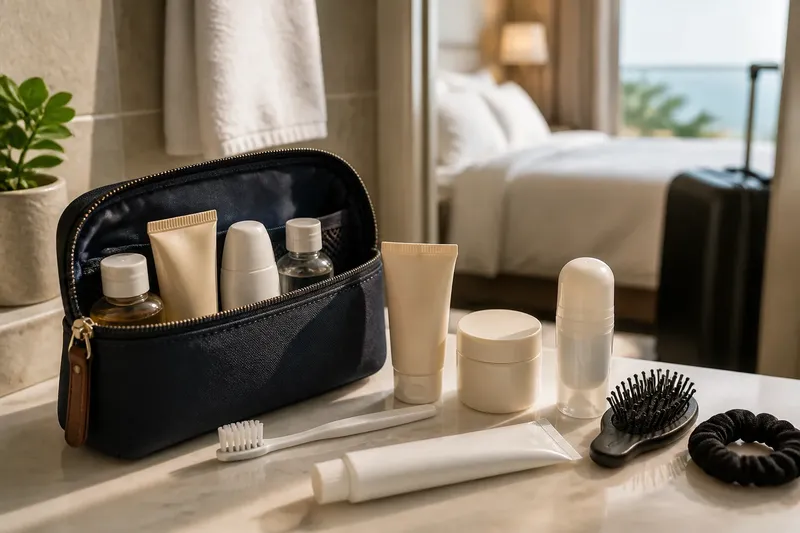
Packing personal care for one night away is easier when you pack in the order you use things, not by trying to assemble a miniature bathroom. A toothbrush, the moisturiser you already reach for and a few other familiar items can cover the routine without bringing every product you own.
The aim is not to recreate your shelf in a washbag. It is to keep the parts of your usual routine that matter to you, while making a clear decision about each item before it goes in. That leaves less to unpack and reduces the chance of carrying two products that do the same job.
Start with the evening
Think through the first routine you will do after arriving. Begin with what you normally do to remove the day’s make-up or sunscreen, then consider cleansing, any leave-on product you regularly use, and moisturiser. Add only the items that have a real place in that sequence.
Do not add a product simply because it feels like a travel occasion. A night away is rarely the best time to try an unfamiliar cleanser, treatment or scented cream. Keeping to familiar products makes the routine easier to follow in an unfamiliar bathroom and avoids packing something you may not want to use.
Say you normally remove make-up with a cleansing balm, wash with a gentle cleanser and finish with moisturiser. For one night away, you could bring those three items in the amounts you expect to use, rather than adding a face mist and a second cream “just in case”. The observable result is a washbag with a clear evening sequence and no duplicate moisturiser.
Plan the morning
Next, picture the morning from waking to leaving. Include the products you actually use: perhaps a toothbrush and toothpaste, cleanser, moisturiser, sunscreen, deodorant, and hair products. If you do not usually apply make-up on an ordinary morning, there is no need to pack a full make-up routine merely because you are travelling.
Use a short list organised by task rather than by brand or product type:
- Clean: face cleanser, toothbrush and toothpaste.
- Care: your usual moisturiser or other regular leave-on product.
- Protect: sunscreen if it belongs in your morning routine.
- Freshen: deodorant and any personal-care item you use each morning.
- Style: the hair tool or styling product you expect to use.
This is a menu, not a prescription. Remove anything that does not belong to your own routine, and add a necessary item that is missing. A list is useful because it makes omissions visible; it should not become a reason to pack every category.
Choose one per task
Look for overlap before choosing sizes. If your cleanser already removes the make-up you wear, a separate make-up remover may not be needed for this trip. If one moisturiser serves both your usual evening and morning routine, take that one rather than packing a day cream and a night cream by default. Keep separate products when they genuinely have different roles in your routine.
Apply the same decision to hair and body care. A shampoo and conditioner you use together may both be necessary; a second shampoo is not. If your accommodation supplies a product, decide whether you are comfortable relying on it before leaving home rather than packing a duplicate automatically. Check its availability and suitability where that affects your choice.
Some products are not interchangeable just because their names sound similar. A face moisturiser, body lotion and sunscreen have different intended uses. Keep the item that serves the task you need; do not turn “one per task” into a reason to substitute carelessly.
Set aside the actual items
Gather your choices on a clean, dry surface before putting anything into the washbag. This gives you a chance to spot doubles: two cleansers, two lip balms, or a full-size product alongside a small version of the same thing. Choose the one you will use and return the other to its usual place.
For a single night, a small quantity may be enough, but use containers suitable for the product. A clean travel bottle can be convenient for a liquid or lotion if the product can be transferred safely and the container closes securely. Leave products in their original packaging when transfer could affect how they are used, identified or stored. Do not decant a product into an unlabelled container if you could confuse it with something else.
Put leak-prone items in a washable pouch or a separate sealed bag, and keep anything you need to reach quickly near the top. Keep a toothbrush apart from products that might leak onto it. These simple separations make the bag easier to use without adding more products.
What should you leave out?
Should you pack a new product for the trip?
Usually, keep the routine familiar and leave new products at home. A night away offers little reason to discover whether a new cleanser or treatment suits you, especially when your regular option is available.
Do you need separate day and night creams?
Bring both only if you regularly use both for distinct reasons. If the same moisturiser already serves your morning and evening routine, that single familiar item may be enough.
Can you rely on products at your accommodation?
That depends on what is provided and whether you are comfortable using it. Check the accommodation details in advance if the answer changes what you pack, then bring your own familiar alternative when needed.
What if you are unsure about an item?
Ask when you would use it and what task it performs. If you cannot name a likely moment or it duplicates something already packed, leave it out and reconsider only if your plans change.
Make the final pass
Before closing the washbag, picture the evening and morning once more. Can you carry out the routines you intend to keep? Is there one product doing each job, without a spare version beside it? Have you included the small essentials, such as toothpaste or a hair tie, that are easy to overlook because they are not cosmetics?
Keep the bag proportionate to the trip. A full-size bottle may still make sense if it is the only practical way to carry a product you rely on, but convenience is the deciding factor, not a rule that everything must be decanted. Follow the product label, manufacturer instructions and any relevant travel rules when choosing containers or packing restricted items.
Once you have packed the things you expect to use, stop adding “maybe” products. Packing personal care for one night away works best as a small version of your real routine: familiar choices, one item for each genuine task, and enough flexibility to leave the rest on the shelf.
When you return, put reusable containers back with your travel supplies and refill them only when needed. That keeps the next overnight bag ready without turning a simple routine into a permanent second collection of products.